
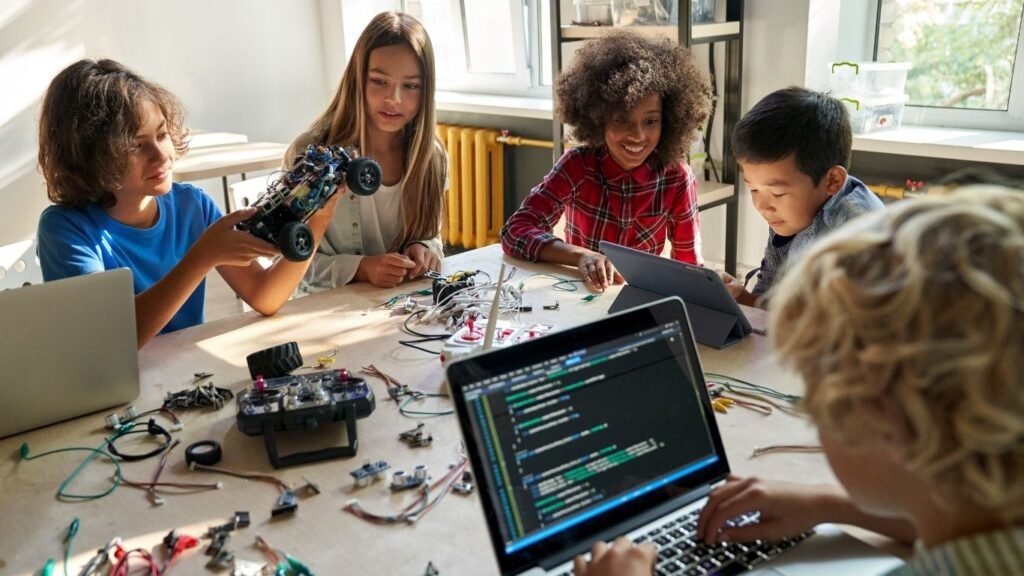
If you’ve ever wondered how to make learning fun for kids while also preparing them for the future, coding games for kids might be the perfect answer. Instead of traditional learning methods, children today are learning through play—and coding games are leading this change.
Let’s explore how coding games work, why they matter, and how they can help your child build real-world skills while having fun.
What Are Coding Games for Kids?
Coding games for kids are interactive, game-based platforms that teach programming concepts in a simple and engaging way. Instead of writing complex lines of code from the beginning, kids solve puzzles, complete challenges, and control characters using logical thinking.
These games introduce key coding concepts like:
- Sequencing (step-by-step instructions)
- Loops (repeating actions)
- Conditionals (if-then logic)
- Problem-solving skills
The best part? Kids don’t even feel like they are studying—they feel like they’re playing.
Why Coding Games Are Important for Kids?
We live in a digital-first world where technology is part of almost everything. Learning coding early helps children not just understand technology but also become creators instead of just users.
Here’s why coding games for kids are so valuable:
1. Builds Logical Thinking
Coding teaches kids how to think step by step. Games make this process natural and fun, helping children understand cause and effect.
2. Improves Problem-Solving Skills
Every game has challenges. Kids learn how to break down problems and find solutions—skills that are useful in school and life.
3. Encourages Creativity
Coding is not just technical—it’s creative. Kids can design games, animations, and stories using their imagination.
4. Boosts Confidence
When kids complete levels or create something on their own, it builds confidence and motivates them to learn more.
5. Prepares for Future Careers
Skills like coding, logic, and analytical thinking are essential for future careers in technology and beyond.
How Coding Games Make Learning Easy?
One of the biggest advantages of coding games is that they simplify complex concepts.
Instead of starting with difficult syntax, kids learn through:
- Drag-and-drop coding blocks
- Visual storytelling
- Interactive challenges
- Reward-based progression
This approach makes learning stress-free and enjoyable, especially for beginners.
Popular Types of Coding Games for Kids
There are different types of coding games designed for various age groups and learning levels.
1. Puzzle-Based Games
These games focus on solving challenges using logic and sequences. Kids learn how to think like programmers.
2. Adventure Coding Games
Children control characters in a story-based environment by writing code instructions.
3. Game Development Platforms
Kids can create their own games using simple coding tools. This boosts creativity and technical skills together.
4. Robotics & Simulation Games
Some platforms combine coding with virtual robots, helping kids understand real-world applications.
Best Age to Start Coding Games
A common question parents ask is: “When should my child start learning coding?”
The good news is—kids can start as early as 5 to 7 years old with simple coding games. At this stage, they learn basic logic and sequencing.
As they grow older (8–14 years), they can move to:
- Advanced game creation
- Real programming languages
- App and web development basics
The earlier they start, the easier it becomes to build strong foundations.
How to Choose the Right Coding Games?
Not all coding games are the same. Choosing the right one makes a big difference in your child’s learning experience.
Here’s what to look for:
Age-Appropriate Content
Make sure the game matches your child’s age and skill level.
Interactive Learning
Games should be engaging, not just instructional.
Progress Tracking
Good platforms allow parents to track learning progress.
Skill Development Focus
Choose games that focus on real coding skills, not just entertainment.
Guided Learning Support
Programs with mentorship or structured learning paths are more effective.
How Edupodz Junior Helps Kids Learn Coding?
At Edupodz Junior, the focus is not just on learning coding but building future-ready skills through engaging methods like coding games.
Children learn through:
- Structured coding programs
- Game-based learning techniques
- Real-world project creation
- Personalized guidance
The goal is simple—make kids confident creators in the digital world.
Instead of just playing games, kids learn how to build them.
Tips for Parents to Support Kids
As a parent, your support plays a big role in your child’s learning journey.
Here are some simple tips:
- Encourage curiosity and exploration
- Don’t focus only on results—focus on learning
- Allow kids to experiment and make mistakes
- Set a regular learning schedule
- Choose quality programs over random apps
Remember, consistency matters more than speed.
Are Coding Games Enough?
Coding games are a great starting point, but they should be part of a larger learning journey.
To truly build skills, kids should eventually move to:
- Structured coding courses
- Real-world projects
- Advanced programming concepts
Think of coding games as the foundation—not the final step.
Final Thoughts
Coding games for kids are more than just entertainment—they are powerful learning tools that build essential life skills.
They help children:
- Think logically
- Solve problems
- Be creative
- Build confidence
Most importantly, they prepare kids for a future where digital skills are not optional—they are essential.
If you want your child to learn in a fun, engaging, and meaningful way, coding games are the perfect place to start.
And with the right guidance and structured programs, your child can go from playing games to creating them.
FAQs: Coding Games for Kids
What are coding games for kids?
Coding games are interactive games that teach programming concepts through fun activities and challenges.
At what age can kids start coding games?
Kids can start as early as 5–7 years old with beginner-friendly platforms.
Are coding games useful for beginners?
Yes, they are one of the best ways for beginners to understand coding concepts easily.
Do coding games improve problem-solving skills?
Absolutely. They help kids think logically and solve challenges step by step.
Can coding games lead to real coding skills?
Yes, when combined with structured learning, they build strong coding foundations.